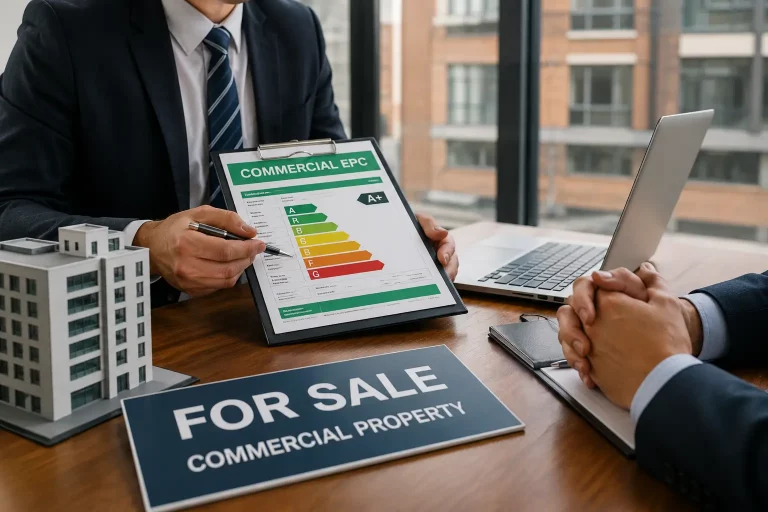

If you’re selling a commercial property, one question often appears early in the transaction:
Do I need a Commercial EPC before selling?
Another common question follows:
Who pays for the Commercial EPC — the seller or the buyer?
These issues often arise when:
- selling an office
- disposing of a retail unit
- marketing a warehouse
- transferring investment property
- completing a lease surrender or portfolio sale
Getting it wrong can delay the transaction and create unnecessary legal problems.
This guide explains exactly when a Commercial EPC is required, who is responsible for arranging it, and what happens if the certificate has expired.
If you need a Commercial EPC quickly, you can Book now or Call now to speak directly with an accredited assessor.
- Most commercial properties need an EPC before being marketed for sale.
- The seller usually pays for the Commercial EPC.
- The certificate must normally be available before estate agents advertise the property.
- An expired EPC often needs replacing before completion.
- Solicitors frequently request EPC documentation during the transaction.
- Commercial EPCs remain valid for 10 years.
Do You Need an EPC to Sell Commercial Property?
Yes. Most commercial properties require a valid EPC before they are marketed for sale.
This applies to:
- offices
- retail units
- restaurants
- warehouses
- industrial buildings
- mixed-use commercial premises
A valid certificate must usually exist before:
- estate agents advertise the property
- particulars are published
- viewings are arranged
- negotiations progress
Without a valid EPC, the sale process may be delayed.
Who Pays for a Commercial EPC During a Sale?
In most cases, the seller pays for the Commercial EPC.
The seller is normally responsible for:
- arranging the EPC assessment
- paying the assessor
- providing the certificate to the buyer
- supplying the EPC to estate agents and solicitors
Buyers rarely arrange the EPC because the obligation usually sits with the person marketing the property.
Quick Guide: Commercial Property Sale EPC Rules
| Question | Answer |
|---|---|
| Is an EPC required before marketing? | Usually yes |
| Who pays for the EPC? | Usually the seller |
| Can buyers request the EPC? | Yes |
| Can solicitors ask for the EPC? | Yes |
| Can an expired EPC be used? | No |
| Is the EPC valid for 10 years? | Yes |
When Is a Commercial EPC Needed During a Sale?
The best time to arrange an EPC is before marketing begins.
A Commercial EPC should ideally be obtained:
Before:
- estate agent listings
- online advertising
- brochures being prepared
- negotiations with buyers
Waiting until solicitors become involved often creates unnecessary delays.
Can You Market Commercial Property Without an EPC?
Generally, no.
Most commercial properties require an EPC before marketing.
Marketing includes:
- online listings
- estate agency advertisements
- brochures
- property particulars
If the building does not have a valid certificate, agents may refuse to list the property until an EPC is obtained.
What Happens If the Commercial EPC Has Expired?
An expired EPC normally cannot be used during a property sale.
If the certificate is over 10 years old, a new assessment is usually required.
A replacement EPC allows:
- continued marketing
- legal compliance
- smoother transactions
- solicitor enquiries to be answered
Can a Buyer Ask for the EPC?
Yes.
Buyers often want to understand:
- the energy efficiency of the building
- future running costs
- possible upgrade requirements
- compliance with MEES regulations
Commercial EPCs form part of the due diligence process.
Can Solicitors Request EPC Documentation?
Yes.
Commercial conveyancing solicitors frequently request:
- the EPC certificate
- certificate number
- issue date
- expiry date
Missing EPC documentation can slow down exchanges and completion.
Does an Empty Commercial Property Need an EPC for Sale?
Usually yes.
Vacant commercial buildings still generally require an EPC if they are being marketed.
Examples include:
- empty shops
- vacant offices
- warehouses
- industrial units
Vacancy alone does not automatically create an exemption.
Which Commercial Properties Need an EPC When Sold?
Most commercial buildings require one.
Examples include:
Offices
- serviced offices
- business centres
- professional suites
Retail Premises
- shops
- showrooms
- salons
- supermarkets
Food Businesses
- restaurants
- cafés
- takeaways
Industrial Buildings
- warehouses
- factories
- storage facilities
Mixed-Use Properties
- ground-floor retail with flats above
- office and warehouse combinations
What If Major Improvements Were Made?
If the property has undergone major changes, a new EPC may be advisable.
Examples include:
- new air conditioning systems
- heating upgrades
- LED lighting installation
- insulation improvements
- solar panels
An updated EPC may produce a better rating and improve marketability.
Does a Low EPC Rating Affect Property Value?
Potentially, yes.
Properties with low ratings may:
- attract fewer buyers
- require improvement works
- raise concerns about MEES regulations
- reduce investment appeal
Buildings with stronger ratings often appeal more to investors and occupiers.
How Long Does a Commercial EPC Assessment Take?
Survey times vary depending on size.
| Property Type | Typical Survey Time |
|---|---|
| Small office or shop | 30–60 minutes |
| Medium property | 1–2 hours |
| Large commercial building | Several hours |
Certificates are usually delivered within 24–48 hours.
Commercial EPC Costs During a Property Sale
Typical London price ranges are:
| Property Type | Typical Cost |
|---|---|
| Small commercial unit | £150–£250 |
| Medium building | £250–£450 |
| Large property | £450+ |
Prices depend on:
- floor area
- complexity
- heating and cooling systems
- number of zones
- access arrangements
How to Arrange a Commercial EPC Before Selling
The process is straightforward.
Step 1
Provide the property address.
Step 2
Confirm the approximate size.
Step 3
Arrange access for the survey.
Step 4
Complete the assessment.
Step 5
Receive the lodged EPC certificate.
Many properties can be completed within 24–48 hours.
Frequently Asked Questions
Who pays for a Commercial EPC when selling?
In most cases, the seller pays.
Can I sell commercial property without an EPC?
Most properties require an EPC before marketing.
Can an expired EPC be used?
No. A replacement certificate is usually required.
Can a buyer ask for the EPC?
Yes. Buyers often request EPC information during due diligence.
Can solicitors delay completion because of an EPC?
Yes. Missing EPC documentation can slow the transaction.
Do empty commercial buildings still need an EPC?
Usually yes, if they are being marketed for sale.
Final Thought
Commercial EPCs are a routine part of most property sales.
Arranging the certificate early helps avoid:
- delays
- solicitor queries
- compliance problems
- interrupted marketing
In most cases, the seller is responsible for providing a valid EPC.
Getting the assessment done before marketing begins helps keep transactions moving smoothly.
If you need a Commercial EPC quickly, you can Book now, Get a fast quote, or Call now to speak directly with an accredited assessor.