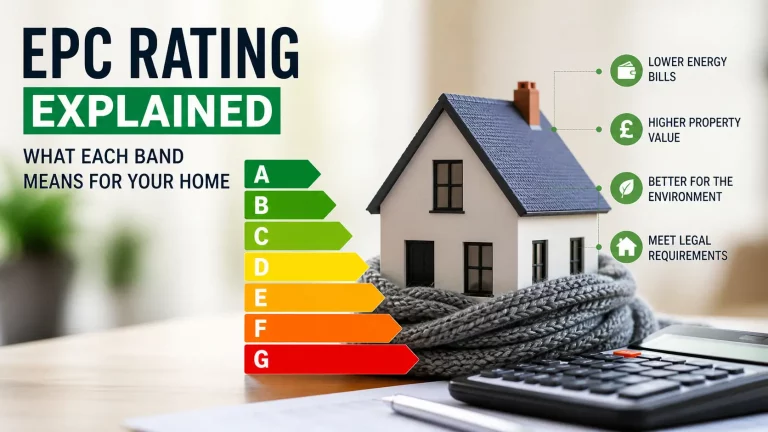

Most UK homes have an EPC rating from A to G. But what those letters actually mean — in terms of cost, value, and legal rules — is often unclear.
Your EPC rating affects:
- How much you pay for energy
- Whether you can rent your property
- How attractive your home is to buyers
- Future upgrade costs
Here’s a clear breakdown of each EPC band and what it really means in practice.
What is an EPC rating?
An EPC rating measures how energy efficient a property is on a scale from A (most efficient) to G (least efficient). It is based on insulation, heating systems, and energy use, and it helps estimate energy costs and environmental impact.
EPC rating bands explained (A to G)
EPC rating A meaning
EPC rating A is the highest rating and means the home is extremely energy efficient.
Typical monthly cost:
- £30–£60
What it means in real life:
- Very low energy bills
- Modern construction or major upgrades
- Strong resale value
EPC rating B meaning
EPC rating B means the home is very energy efficient.
Typical monthly cost:
- £50–£90
What it means:
- Low running costs
- Good insulation and heating systems
- Attractive to buyers and tenants
EPC rating C meaning
EPC rating C is considered a good standard in the UK.
Typical monthly cost:
- £70–£120
What it means:
- Reasonable energy bills
- Increasingly expected minimum standard
- Good balance between cost and efficiency
EPC rating D meaning
EPC rating D is average.
Typical monthly cost:
- £90–£150
What it means:
- Higher energy bills than necessary
- Common in older UK homes
- Improvement potential is usually high
EPC rating E meaning
EPC rating E is the minimum legal standard for renting property.
Typical monthly cost:
- £120–£180
What it means:
- Higher running costs
- Limited appeal to buyers
- Risk if regulations tighten
EPC rating F meaning
EPC rating F is inefficient and expensive to run.
Typical monthly cost:
- £150–£220+
What it means:
- Major upgrades needed
- Cannot usually be rented
- Poor insulation and heating
EPC rating G meaning
EPC rating G is the lowest rating.
Typical monthly cost:
- £200+
What it means:
- Very high energy bills
- Extremely inefficient
- Not legally rentable
EPC rating and energy bills
EPC rating directly affects how much you pay for energy each month.
Typical UK monthly costs:
- A: £30–£60
- B: £50–£90
- C: £70–£120
- D: £90–£150
- E: £120–£180
- F–G: £150–£200+
Lower ratings mean higher energy use and higher bills.
Is EPC rating D good?
EPC rating D is considered average. It means the property meets basic efficiency standards but has higher energy costs than newer or upgraded homes. Improving to C can reduce bills and increase property value.
Minimum EPC rating law UK
In England and Wales, rental properties must have a minimum EPC rating of E. Landlords cannot legally rent out homes rated F or G unless they have a registered exemption.
How to improve EPC rating (quick wins vs bigger upgrades)
Quick, low-cost improvements
- Loft insulation
- LED lighting
- Draught-proofing
Medium upgrades
- Boiler replacement
- Heating controls
- Double glazing
Larger investments
- Wall insulation
- Heat pumps
- Solar panels
Some low-cost changes can still move your rating up.
How much can you save by improving EPC rating?
Improving your EPC rating can reduce energy bills quickly.
Typical savings:
- D → C: £20–£40 per month
- E → C: £50–£80 per month
Over a year, that can mean hundreds of pounds saved.
Why EPC ratings matter more now
EPC ratings are becoming more important due to:
- Rising energy costs
- Stricter rental rules
- Buyer demand for efficient homes
- Lender requirements
Higher-rated homes are cheaper to run and easier to sell or rent.
EPC rating C monthly cost
Around £70–£120 per month depending on property size and usage.
EPC rating D monthly cost
Typically £90–£150 per month, often higher in poorly insulated homes.
EPC rating E monthly cost
Usually £120–£180 per month due to higher energy usage.
EPC rating B monthly cost
Around £50–£90 per month with good insulation and efficient systems.
EPC rating A monthly cost
Often £30–£60 per month thanks to very high efficiency.
EPC rating FAQs
What does EPC rating C mean?
EPC rating C means the home is reasonably energy efficient with moderate energy bills and is considered a good standard in the UK.
Is EPC rating D bad?
EPC rating D is not bad, but it is not efficient. It usually means higher energy bills and room for improvement.
Can I sell a house with a low EPC rating?
Yes, but lower EPC ratings can reduce property value and buyer interest.
Can I rent a property with EPC rating F or G?
No, unless you have a valid exemption, properties with F or G ratings cannot be rented out.
How long does an EPC last?
An EPC lasts for 10 years unless the property is significantly changed.
Does double glazing improve EPC rating?
Yes, double glazing can improve your EPC rating by reducing heat loss and improving energy efficiency.
What to do next
Understanding your EPC rating is the first step. Acting on it is what saves money.
If your property is:
- A–C: you are in a strong position
- D: improvements are worth considering
- E or below: action may be needed soon
Even small upgrades can lower your bills and improve your rating.
If you are unsure where your property stands, getting an up-to-date EPC is the easiest way to understand what improvements will make the biggest difference.